Muslims in Japan: burial and prayer disputes, and three false claims
An estimated 420,000 Muslims live in Japan. Burial cemeteries, group prayers in parks and school lunches have caused friction and debate in several places. We sort out the misinformation spreading on social media and set out the arguments for building the means to live together and for tightening rules in line with Japanese customs.
Verdict: are the viral claims true?
- False“Miyagi Prefecture is still considering a burial cemetery for Muslims”Governor Murai withdrew the idea itself in September 2025. The prefecture says there is “no reconsideration whatsoever.”
- False“The Tokyo Metropolitan Government subsidizes the construction of mosques”The Tokyo subsidy covers setting up prayer rooms in hotels and similar facilities, not building mosques.
- False“Kitakyushu City decided to introduce halal school lunches”The city board of education says “there is no fact that halal school lunches were decided.”
- Unverified“Muslims buried 14 or more bodies without permission at a cemetery in Honjo City”This has been reported as an allegation by the cemetery’s manager, but reports differ on the timing, and the city has not indicated that it confirmed the facts. The city says that, if true, it would “violate the law.”
Translated and adapted from our Japanese original. Facts are as of the original publication date unless noted.
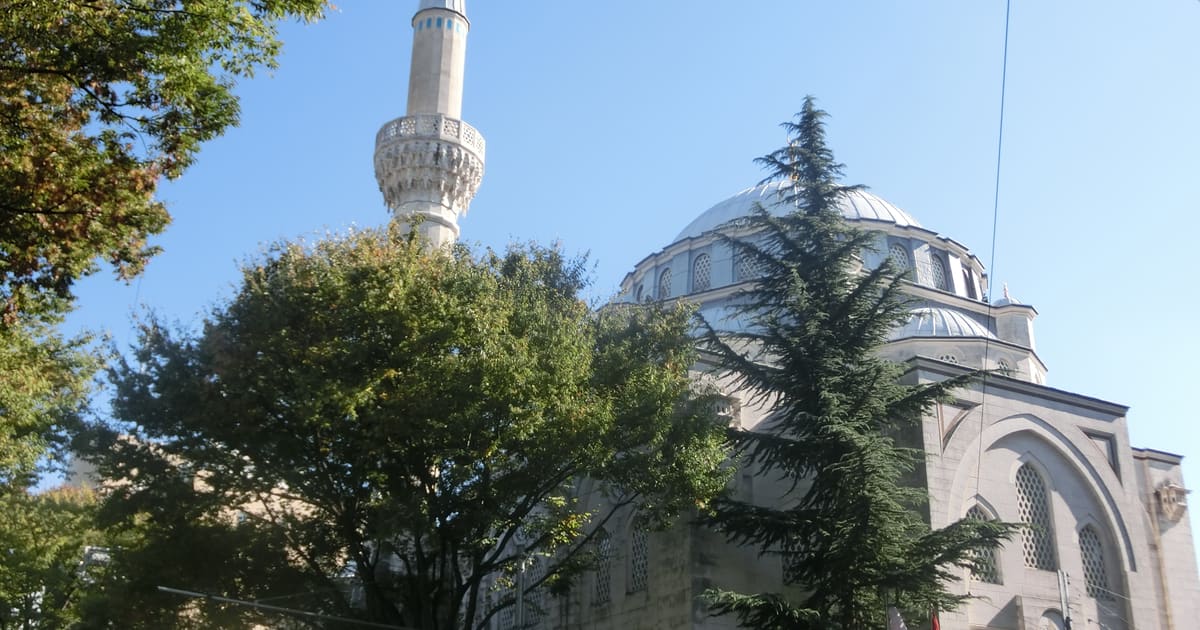
How far should Japan go in accommodating its Muslim residents?
- Muslims in Japan (estimate, end-2024)
- About 420,000
- Burials nationwide (FY2024, 0.02% of all funerals)
- 383
- Miyagi’s plan to consider a burial cemetery
- Withdrawn
Pro-coexistence
Respect their faith, provide cemeteries and places of prayer, and welcome them as members of the community.
Stricter rules
Ask them to follow Japanese custom, where over 99% are cremated, and strictly limit burial and prayer in public spaces.
- Both sides agree
- The national government, not just local authorities, needs to set out a policy.
- What to watch next
- Whether the national government sets out a policy on burial, and its basic policy on foreign nationals.
Key points
- Muslims living in Japan are estimated at about 420,000 as of the end of 2024 — about 363,000 foreign nationals and about 55,000 Japanese citizens (about 0.3% of the total population).
- On burial cemeteries, a plan in Hiji, Oita Prefecture, was withdrawn after a mayoral election, and Miyagi Governor Yoshihiro Murai also withdrew his consideration of one in September 2025. Burials (rather than cremation) nationwide numbered 383 in fiscal 2024, 0.02% of all funerals.
- In May 2026, Ichikawa City in Chiba Prefecture for the first time refused to allow a group prayer held for years during a festival in a park in front of a mosque. Muslims who attend the mosque have started a patrol to watch over local children on their way to and from school.
- On social media, false information is also spreading, such as “Miyagi is considering a burial cemetery” and “Tokyo subsidizes mosque construction.”
1. What is happening
Sorting out the viral claims
| Viral claim | What we could confirm |
|---|---|
| Miyagi is still considering a burial cemetery | Withdrawn in September 2025. Japan Fact-check Center rated the claim “misleading.” |
| Tokyo subsidizes mosque construction | The Tokyo subsidy covers prayer rooms in hotels and similar facilities. |
| Kitakyushu decided on halal school lunches | The city board of education says “there is no fact that this was decided.” |
| 14 or more unauthorized burials at a cemetery in Honjo | Reported as an allegation by the cemetery manager, but accounts of the timing differ, and there is no statement that the city confirmed the facts. |
Main developments around Japan
| Place | What happened |
|---|---|
| Hiji, Oita Prefecture | Burial cemetery planned in 2018. A candidate opposing it won the 2024 mayoral election, and the sale of town land was withdrawn. |
| Miyagi Prefecture | Governor Murai announced in 2024 that he would consider a burial cemetery. Withdrawn in September 2025. |
| Honjo, Saitama Prefecture | A private cemetery has accepted burials since 2019. Dozens of complaints, such as “stop the burials,” to the management company and the city. |
| Ichikawa, Chiba Prefecture | In May 2026, group prayer in the park in front of the mosque was refused for the first time. The mosque community started a patrol. |
By the numbers
- Muslims in Japan: about 420,000 (estimate, end-2024; about 363,000 foreign nationals and about 55,000 Japanese citizens)
- Burials nationwide: 383 (fiscal 2024; 0.02% of all funerals)
Sources (mostly in Japanese)
2. What each side says
We summarize each side's main arguments in our own words, based on the original statements and reporting.
Pro-coexistence
In December 2024, Miyagi Governor Yoshihiro Murai argued for the need for a burial cemetery, saying “this has to be done even if there is criticism.” However, the heads of all municipalities in the prefecture were reluctant to accept one, and he withdrew the idea in September 2025.
Health, Labor and Welfare Minister Kenichiro Ueno told the Diet that “we do not recognize that burial has caused public health problems,” and the government has no plan to ban burial. Hiji town had also denied the possibility of water contamination, saying the distance from the planned site to water sources exceeded the recommended standard.
Sixteen Muslims who attend the mosque in Ichikawa formed a volunteer crime-prevention group and began patrolling around an elementary school along a route drawn up by the police. Their representative says, “We want to contribute to the area as members of the local community.” A city assembly member who formerly belonged to Sanseito also said, “People who find them scary are exactly the ones who should come and meet them once.”
Stricter rules
In Japan, 99.98% of the dead are cremated, so there is no need to add more burial cemeteries. Japan is humid and short of land, and cemeteries could be damaged by disasters such as earthquakes and tsunamis (Mizuho Umemura, Sanseito member of the House of Councillors).
Masamune Wada, a former member of the House of Councillors who allied with Sanseito in the Miyagi governor election, criticized the prefecture’s consideration, saying “a burial cemetery presupposes migration, settlement and immigration.” In Hiji, Oita Prefecture, Tetsuya Abe, who campaigned to stop the cemetery, won the mayoral election, and the town withdrew its plan to sell town-owned land.
Ichikawa Mayor Ko Tanaka says his decision not to allow group prayer in a park used by the general public “was not wrong,” and he will continue not to allow it. However, a story about nearby residents that he cited as grounds for the decision was denied by a former resident, and the mayor admitted he had confused it with a story about a different place.
Local governments
The mayor and town assembly of Hiji, and the mayors of the neighboring cities of Kitsuki and Beppu, all believe the national government should set out a policy. In November 2025, the Kitsuki branch of the Liberal Democratic Party’s Oita chapter also submitted a request to the same effect to the health minister and others.
Reading between the lines
This section is our editors' interpretation (speculation). It is not confirmed, but the facts it is based on are sourced.
Local governments
Why are they asking the national government for a policy?
SpeculationLocal governments issue permits for burial cemeteries, but accepting foreign nationals is national policy. If a single municipality takes one on amid strong local opposition, the backlash and criticism land on it alone. As Governor Murai was forced to withdraw, it is politically difficult for a local leader to decide alone, and they likely want the national government to set standards and a division of roles.
Facts this is based on
- • Miyagi Prefecture received about 2,400 complaints, and the heads of all municipalities were reluctant to accept a cemetery.Tokyo Shimbun (Miyagi governor election and burial cemetery, Japanese)(Nov 11)KHB Higashi Nippon Broadcasting (Governor Murai’s withdrawal, Japanese)(Sep 18)
- • The leaders of Hiji, Kitsuki and Beppu say the national government should set out a policy.Oita Godo Shimbun (Hiji burial cemetery plan, Japanese)(Dec 8)
What people are saying
We searched Japanese posts on X (formerly Twitter) for “Muslim burial” and “Muslim coexistence” from July to October 2026. Most posts were negative about burial or coexistence, and many contained unverified stories or harsh words about the religion itself. Posts calling for coexistence were few.
Pro-coexistence
- “With so much discrimination around, what matters is meeting people with consideration and tolerance.”
Stricter rules
- “Japan is a small country where cremation is the norm. If you insist on burial, the right thing is to be buried in your home country.”
- “Burying someone without permission is no different from abandoning a body. I want it properly cracked down on.”
- “Before talking about multicultural coexistence, they should first respect Japanese culture and customs.”
Posts are paraphrased, not quoted, and individual accounts are not named.
3. Where things stand
Where they agree
- Where to place burial cemeteries in communities is a difficult issue in Japan, where cremation is the norm.
- The national government, not just local authorities, needs to set out a policy.
- Conflict should not be stirred up by false information.
Where they disagree
- Whether burial cemeteries and places of prayer should be provided or restricted.
- Whether coexistence should rest on respect for faith or on adapting to Japanese customs.
What to watch
- Whether the national government sets out a policy on burial cemeteries.
- The basic policy on foreign nationals, due within fiscal 2026.
- How Ichikawa and other places handle prayer and local events.
Many of those involved agree that local governments cannot solve the issues around Muslim burial and prayer on their own, and that the national government should set out a policy. False information is also spreading on social media. Those favoring coexistence argue Japan should respect their faith, provide cemeteries and places of prayer, and welcome them as members of the community. Those favoring stricter rules argue they should follow Japanese custom, where more than 99% are cremated, and that burial and prayer in public spaces should be restricted.