Horse-racing winnings and 'double taxation': 25% takeout and income tax
The Sankei Shimbun reported that, over payouts from horse racing, keirin (bicycle racing) and similar betting, calls are emerging within the ruling parties for a tax review that includes making them tax-free. About 25% is deducted when a betting ticket is bought, and income tax is charged on top if it wins, and the claim that this is "double taxation" has also been raised by lawmakers in the Diet. Based on the law, government answers in the Diet and Supreme Court rulings, we set out what we could confirm, and the views of those seeking tax exemption or a review and those who say the tax should be kept.
Verdict: are the viral claims true?
- Misleading“Taxing horse-racing payouts is double taxation”The amount deducted when a ticket is bought (the takeout) is the organizer's share, and the payment to the national treasury is also money paid by the Japan Racing Association (JRA). It is not double taxation in the tax-law sense of taxing the buyer's income twice. However, it is true that, from the buyer's point of view, the structure can feel like a "double burden," with money taken out and then tax charged on top.
- True“About 25% is taken out when you buy a betting ticket”The JRA's payout rates are 80% for win and place bets, 72.5% for trifecta bets and 70% for WIN5, among others, so 20-30% is deducted depending on the bet type. On average it is about 25%.
- True“Lottery winnings are not taxed”Article 13 of the Act on Lottery Tickets with Prizes provides that no income tax is imposed. Payouts from the soccer lottery (toto) are also tax-free by law. The government has explained in the Diet that the reason for lotteries is that the share paid out as prizes is low, at 50% or less.
- Misleading“Losing tickets cannot be deducted as expenses”If the payouts are occasional income, losing tickets cannot be deducted. However, the Supreme Court ruled in 2015 and 2017 that the payouts of people who had bought continuously in large volumes over long periods and made a profit were miscellaneous income, and that losing tickets were also expenses. The National Tax Agency also revised its circular in 2018.
- Misleading“Payouts up to ¥500,000 are not taxed”The ¥500,000 special deduction applies not to each payout but only once to the total occasional income for a year. Because it is calculated as payouts minus the cost of the winning tickets, it can exceed ¥500,000 if there are several payouts in a year.
Translated and adapted from our Japanese original. Facts are as of the original publication date unless noted.
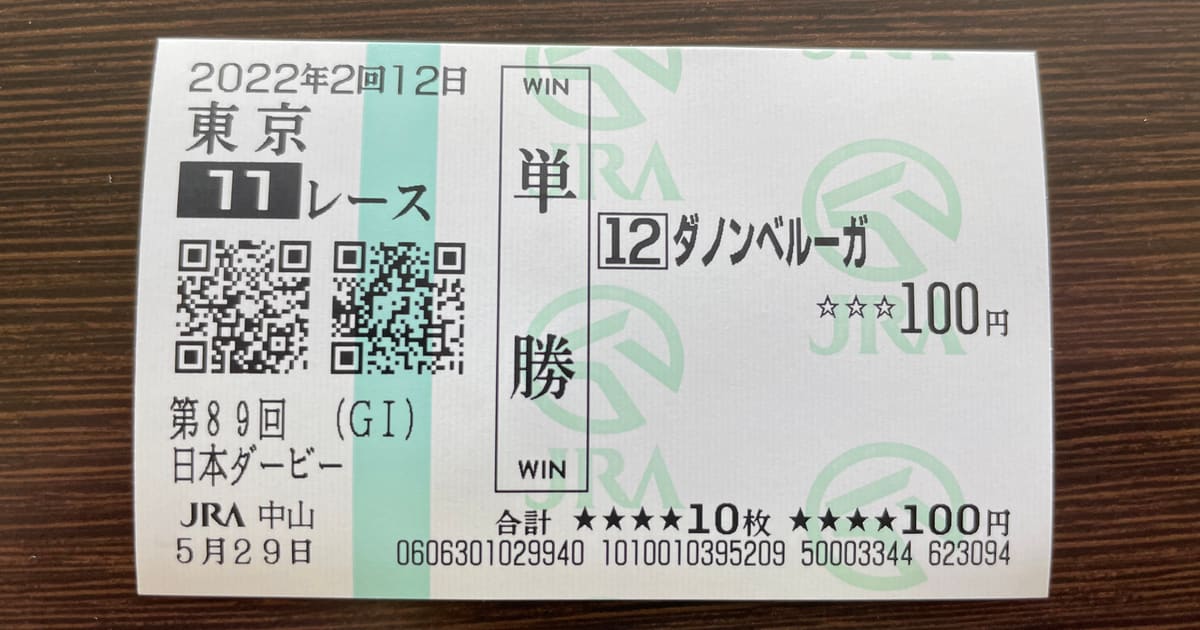
Should the double taxation of horse-racing payouts end, making them tax-free?
- Share deducted when a ticket is bought
- About 25% (20-30% depending on bet type)
- First payment to the national treasury by the JRA
- 10% of sales
- Share of lottery sales paid out as prizes (FY2024)
- 46.4% (tax-free)
Seeking tax exemption or a review
Money is taken out at purchase and then taxed, which is unfair compared with the lottery. Filing is also complicated and should be reviewed.
The tax should be kept
Payouts are income too, and add to the ability to pay tax. The payment to the treasury is not a tax, and addiction is also a concern.
- Both sides agree
- How losing tickets are treated is hard to understand, and some people are hit with large back-tax bills.
- What to watch next
- Whether the taxation of public betting sports is taken up in the ruling parties' tax-reform talks toward the year end.
Key points
- The Sankei Shimbun reported on October 17 that calls for a tax review, including making payouts tax-free, are emerging within the ruling parties over payouts from horse racing, keirin and similar betting. It said there is discontent that people are "taken twice," because about 25% is deducted as the organizer's share at purchase and tax is charged on top.
- Payouts are in principle occasional income (ichiji shotoku). The cost of the winning tickets and a special deduction of ¥500,000 are subtracted from a year's payouts, and half of the remainder is taxed together with salary and other income.
- The "double taxation" issue has been raised in the Diet by Kenta Fujimaki, a lower house member from the Japan Innovation Party (2023), and Kenichiro Saito, an upper house member from the NHK Party (2024). The government has answered that payouts also increase an individual's ability to pay tax, so income tax should be imposed.
- Losing tickets are in principle not expenses, but the Supreme Court recognized them as expenses for people who had bought continuously in large volumes and made a profit.
1. What is happening
Sorting out the viral claims
| Viral claim | What we confirmed |
|---|---|
| Taxing payouts is double taxation | It is not double taxation under tax law. The deducted amount is the organizer’s share, and the payment to the national treasury is also paid by the JRA. However, from the buyer’s point of view, the structure does amount to a “double burden.” |
| About 25% is taken out when you buy a betting ticket | True. The JRA sets payout rates of 70-80% depending on the bet type. |
| Lottery winnings are tax-free | True. This is set out in Article 13 of the Act on Lottery Tickets with Prizes. Payouts from toto are also tax-free. |
| Losing tickets cannot be deducted as expenses | That is the principle, but the Supreme Court recognized them as expenses for people who had bought continuously in large volumes and made a profit. |
| Payouts up to ¥500,000 are not taxed | The ¥500,000 deduction applies only once to the total for a year. If you win several times a year, you can exceed it. |
How tax on payouts is calculated
Payouts are in principle “occasional income” (ichiji shotoku) (Income Tax Act, Article 34).
- Occasional income = total payouts for the year − cost of the winning tickets − special deduction (up to ¥500,000)
- Half of that is added to other income such as salary to calculate the tax (Income Tax Act, Article 22)
For example, suppose someone bought ¥10 million worth of betting tickets in a year and received a ¥9 million payout on a ¥10,000 winning ticket. Overall they lost ¥1 million, but their occasional income is ¥9 million − ¥10,000 − ¥500,000 = ¥8.49 million, and half of that, ¥4,245,000, is added to their other income. The ¥9.99 million spent on losing tickets cannot be deducted. This is why people say they are “taxed even though they lost.”
When losing tickets count as expenses
| When | What happened |
|---|---|
| March 2015 | The Supreme Court ruled that the payouts of a person who had used software to buy comprehensively in large volumes over a long period and made a steady profit were miscellaneous income, and that losing tickets were also expenses |
| December 2017 | The Supreme Court ruled that even without software, the payouts could be miscellaneous income given the manner of buying and the state of profits, and that losing tickets could be expenses |
| June 2018 | The National Tax Agency revised Article 34-1 of its Basic Circular on the Income Tax Act, treating as miscellaneous income cases such as when it is objectively clear that a person buys on almost every race throughout the year and keeps making a profit |
The National Tax Agency explains that, for ordinary horse-racing fans, payouts remain occasional income as before, and losing tickets cannot be deducted as expenses.
What happened: Jai’s back-tax bill
One case where this line actually came into play is that of Jai (X: @instantjayjay), a member of the comedy trio Instant Johnson.
| When | What happened |
|---|---|
| Tax years 2016-20 | He filed returns deducting the cost of all the betting tickets he bought in each year from his payouts as expenses |
| December 2020 | He receives a payout of ¥64,106,465 at Kawasaki racecourse |
| March 2022 | The Tokyo Regional Taxation Bureau tells him his payouts are “occasional income” and the cost of losing tickets cannot be deducted, and he pays tens of millions of yen including delinquency tax |
| June 2022 | He reveals on YouTube that “I’ve gone bankrupt” and files an appeal with the National Tax Tribunal |
| 2025 onward | He holds repeated talks with politicians to seek a review of the tax system, and in August 2026 is also invited to a study session of the Japan Innovation Party |
According to Jai, over five years he spent a total of several hundred million yen on betting tickets, and his payouts also came to several hundred million yen. He was ahead overall, but because the cost of losing tickets could not be deducted, he ended up being taxed on an amount larger than his actual profit. He has said the back-tax bill was “enough to buy a condo in a regional city” and “more than twice my annual income” (FNN Prime Online, Mainichi Shimbun, Nikkan Sports).
In December 2022, Jai set up the general incorporated association “Association for Considering the Future of Horse-Racing Taxation”, and serves as its representative director under his real name, Takahiro Watanabe. The association’s purpose is to improve the tax-filing environment for public betting sports, centered on horse racing, and to achieve “appropriate and fair taxation,” and it conducts research on the tax system and makes policy proposals. On its website it points out as problems that 25% of sales is deducted, of which 10% becomes the payment to the national treasury, and that payouts are then taxed as well, and that losses are not taken into account. It is recruiting members (supporters), saying that “to get our voice to policymakers, the power of numbers matters more than anything” (organization overview, SPAIA Keiba).
Jai himself has said that, rather than “making losing tickets expenses,” he thinks “no tax at all would be best.” FNN, on the other hand, reported that in light of past Supreme Court precedents, his appeal was unlikely to be accepted. We could not confirm from publicly available information what happened to the appeal afterward.
What “double taxation” means in tax law
The double taxation that is at issue in tax law is when tax is charged twice on the same income or property of the same person. For example, the Supreme Court ruled in 2010 that imposing income tax on life insurance annuities that had already been subject to inheritance tax was double taxation and not permitted.
In the case of horse racing, the roughly 25% deducted at purchase is the JRA’s share, and from it the JRA pays 10% of sales to the state as the first payment to the national treasury (Japan Racing Association Act, Article 27). This is the JRA’s obligation, not a tax imposed on people who buy betting tickets. Income tax on payouts is a tax on the income of the people who win. For this reason, it is not double taxation under tax law.
How it differs from the lottery and toto
| Share paid out as prizes or payouts | Income tax | |
|---|---|---|
| Horse racing (JRA) | 70-80% (varies by bet type) | Charged (as occasional income, etc.) |
| Lottery | 50% or less (46.4% in FY2024) | Not charged (Act on Lottery Tickets with Prizes, Article 13) |
| toto (soccer lottery) | Half of sales or less | Not charged (Act on Sports Promotion Lotteries, Article 16) |
Sources (mostly in Japanese)
2. What each side says
We summarize each side's main arguments in our own words, based on the original statements and reporting.
Seeking tax exemption or a review
Kenta Fujimaki, a lower house member (Japan Innovation Party), asked at the House of Representatives Committee on Financial Affairs in March 2023 whether, given that buyers already pay "the payment to the national treasury, which is effectively a tax" when buying tickets, taxing the payouts as well amounts to double taxation. Kenichiro Saito, an upper house member (then of the NHK Party), also said at the House of Councillors Committee on Internal Affairs and Communications in March 2024 that he had received many requests to end the "so-called double taxation" at purchase and at payout.
Some say it is unfair that lottery winnings are tax-free even though about 50% is deducted, while betting tickets are taxed after money has been deducted. Kazuki Takazawa, a lower house member from the Democratic Party for the People, said at the House of Representatives Committee on Internal Affairs and Communications in April 2026 that public betting sports also aim to serve the public good, and that making them tax-free like the lottery could be one option.
Kazuma Nakatani, a lower house member from the Constitutional Democratic Party of Japan, argued in a written question in April 2024 that the income of people who buy at ticket windows cannot be tracked, so fairness cannot be maintained. He proposed making payouts tax-free like the lottery, reviving a "betting ticket tax" that would exempt payouts and tax the organizers instead, and introducing withholding tax.
Comedian Jai, who was hit with a back-tax bill of tens of millions of yen in 2022, has held repeated talks with lawmakers, was also invited to a study session of the Japan Innovation Party, and is calling for the tax system to be reviewed. Within the party, former upper house member Shun Otokita and others are discussing a review of gambling taxation. Jai says that if payouts were made tax-free, large-scale betting would increase, sales would grow, and tax revenue would come in from that.
Tax law scholar Hirotsugu Kiyama, a professor at Aoyama Gakuin University, pointed out that losing tickets become expenses only in limited cases, such as when the return rate over several years exceeds 100%, and that this cannot be judged at the time of filing. He says a system that matches reality is needed, such as creating a special account that taxes profits at a flat rate.
The tax should be kept
In March 2023, then Finance Minister Shunichi Suzuki answered Fujimaki's question by saying that payouts are no different in that they are earned by individuals and increase their ability to pay tax, and that income tax should be imposed. At the House of Representatives Committee on Internal Affairs and Communications in April 2026, the Ministry of Finance also explained the same view.
In a written answer in April 2024, the government said that the basic principle of income tax is to tax all income, and that it is not considering making payouts tax-free, introducing a betting ticket tax or introducing withholding tax. It explained that lottery winnings are tax-free because the share paid out as prizes is low, at 50% or less, and most of the sales are used for public-interest purposes.
House of Representatives (government's written answer to Kazuma Nakatani's written question, Japanese)(Apr 26)Diet records (House of Representatives Committee on Internal Affairs and Communications, answer by the Ministry of Internal Affairs and Communications on why lottery winnings are tax-free, Japanese)(Apr 16)The payment to the national treasury is money the JRA pays to the state under the Japan Racing Association Act, amounting to 10% of sales and half of its surplus, and is not a tax imposed on people who buy betting tickets. This underpins the view that buyers' income is not being taxed twice.
The Sankei Shimbun reports that wider use of gambling could increase addiction, and that the outlook for the debate is unclear.
Examples overseas
Treatment differs overseas too. In the United States, the full amount of gambling winnings of people who bet as a hobby, including on horse racing and lotteries, is taxable. In the United Kingdom, betting and gambling are in principle not treated as a business, so bettors' profits are not taxed, but losses cannot be deducted either. Jai says "Japan is the only country that collects tax this way," but at least the United States also taxes winnings.
Posts on X
Shun Otokita, Japan Innovation Party (former upper house member): He posted that the Japan Innovation Party's finance and financial affairs committee had been discussing the existing taxation of gambling such as horse racing, inviting experts, that there are points that can be improved from the perspective of being "simple, fair and neutral," and that it will compile proposals toward the year end.
View the post by Shun Otokita, Japan Innovation Party (former upper house member) on X ↗
Reading between the lines
This section is our editors' interpretation (speculation). It is not confirmed, but the facts it is based on are sourced.
The Japan Innovation Party
Why have calls for reviewing gambling taxation emerged in the Japan Innovation Party, which has joined the ruling side?
SpeculationThe background appears to be that, with the opening of the Osaka IR (an integrated resort including a casino) approaching, it has become necessary to consider the tax treatment of casinos and public betting sports together. The party's lawmakers had raised this issue in the Diet before, and interest had also grown through talks with Jai and other events. On the other hand, the question "what about pachinko?" was also raised at a study session, so the review could expand beyond tax cuts to taxing pachinko profits, which have rarely been declared until now.
Facts this is based on
- • With the IR opening approaching, the Japan Innovation Party is pressing ahead with a debate on reviewing gambling taxation. The treatment of pachinko also came up at a study session.Money Post Web (the difficult question of how to treat pachinko that arises in the debate over reviewing gambling taxation, Japanese)(Oct 11)
- • Jai said he was invited to the party's study session because the Japan Innovation Party had joined the ruling side and an IR is coming.Naigai Times / d menu news (Jai interview part 2, "the tax system is wrong," Japanese)(Oct 1)
- • Fujimaki (Japan Innovation Party) raised double taxation in the Diet in 2023.Diet records (House of Representatives Committee on Financial Affairs, question by Kenta Fujimaki, Japanese)(Mar 15)
What people are saying
We searched X (formerly Twitter) for terms such as "horse racing double taxation," "payouts tax-free," "betting ticket tax wrong," "horse racing tax-free addiction" and "horse racing tax-free opposed," and checked Japanese posts, mainly from October 2026. Most posts called for tax exemption or a review, and posts calling for the tax to be kept came mainly from the standpoint of addiction countermeasures
Seeking tax exemption or a review
- “The takeout is already deducted when you buy a ticket, and there are tons of losing tickets too, so I think it's wrong to tax even the winnings.”
- “Even if you spend ¥50 million in a year and get ¥60 million back, your real profit is ¥10 million, so I can't accept that losing tickets don't count as expenses.”
- “If there's a lawmaker who started calling for this tax review, I want to support them for a long time.”
The tax should be kept
- “Rather than making it tax-free, I'd like them to collect tax properly first and push ahead with measures against gambling addiction.”
Posts are paraphrased, not quoted, and individual accounts are not named.
3. Where things stand
Where they agree
- Where the line falls on whether losing tickets can be deducted as expenses is hard to understand, and some people are hit with large back-tax bills.
- Buying in cash at ticket windows leaves no record, which can create unfairness in taxation compared with people who bet online.
Where they disagree
- Whether the amount deducted at purchase (including the payment to the national treasury) should be seen as effectively a tax.
- Whether payouts from public betting sports should be made tax-free like the lottery.
What to watch
- Whether the taxation of public betting sports is taken up in the ruling parties' tax-reform talks toward the year end.
- Whether, with the IR opening approaching, this expands into a review of gambling taxation as a whole, including casinos and pachinko.
It is true that about 25% is deducted when a betting ticket is bought, and that income tax is charged on top if it wins. However, the deducted amount is the organizer's share, and the payment to the national treasury within it is also money paid by the JRA, so it is not "double taxation" in the tax-law sense of taxing the same income of the buyer twice. It is true that lottery winnings are tax-free, but the government cites the low share paid out as prizes as the reason. Those seeking tax exemption or a review believe that being taxed after money has been deducted is unfair compared with the lottery, and that filing is complicated. Those who say the tax should be kept believe that payouts are income too and should be taxed according to the ability to pay.