France protests: Limoges town hall burned, but “migrant riot” videos are fake
On October 17, nationwide protests over the cost of living and schools drew about 550,000 people in France, and the historic town hall in Limoges was set on fire and largely destroyed. On Japanese social media, videos claiming “migrants are rioting” are also spreading, but some show unrelated events. We sort out what has been confirmed and set out the views of those who say restoring order comes first and those who say policing must change.
Verdict: are the viral claims true?
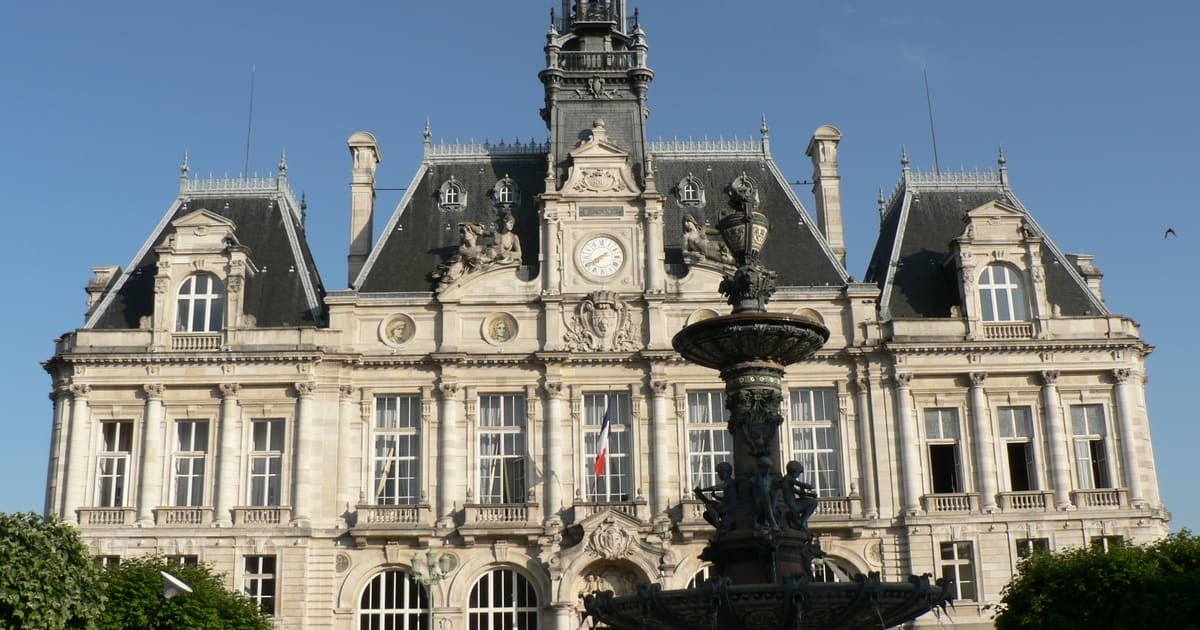
- True“A town hall was burned during the protests”In Limoges, the town hall completed in 1883 was set on fire and largely destroyed. Local authorities say masked people entered the building and started the fire.
- False“The video of cars set on fire in front of the Eiffel Tower is from these protests”It was filmed in May this year, right after Paris Saint-Germain won the UEFA Champions League.
- False“The video of a crowd throwing stones at riot police is from the French protests”The footage, shared with the caption “they don’t look French,” was filmed in Indonesia last year.
- Unverified“The riots were started by migrants”Authorities and media describe “masked groups” and “people who came looking for confrontation.” We found no reports showing the violence was carried out by migrants.
Translated and adapted from our Japanese original. Facts are as of the original publication date unless noted.
France’s protests: restore order first, or change policing?
- Protesters nationwide (Interior Ministry)
- 550,000
- People detained nationwide
- 1,200
- Limoges town hall completed
- 1883
Restore order
Violence is unacceptable. Those who caused destruction must be punished and order restored first.
Change policing
Most protesters were peaceful. Policing that inflames confrontation must change.
- Both sides agree
- Looting, arson and other destruction cannot be accepted.
- What to watch next
- How parties position themselves ahead of the presidential election about six months away, and where the protests go next.
Key points
- On October 17, protests over the cost of living and schools were held across France. According to the interior minister, about 550,000 people took part, including 110,000 in Paris.
- In Limoges, in central France, masked people entered the town hall completed in 1883 and set it on fire; the roof and bell tower collapsed and most of the building was destroyed. In Marseille, people broke into the town hall and damaged it, and in Lyon a tourist information office was set on fire.
- The prime minister said 1,200 people were detained nationwide. Authorities said the “overwhelming majority” of participants protested peacefully.
- Videos claiming “migrants are rioting” are spreading on Japanese social media, but NHK’s checks found they include footage from other times and other countries.
1. What is happening
Sorting out the viral claims
| Viral claim | What we confirmed |
|---|---|
| A town hall was burned down during the protests | Limoges town hall was set on fire and largely destroyed. Its roof and bell tower, a symbol of the city, collapsed. |
| Video of cars set on fire in front of the Eiffel Tower | Filmed in May this year, right after Paris Saint-Germain won the Champions League. Japanese-language posts alone were viewed nearly 2.5 million times. |
| Video of a crowd throwing stones at riot police | Filmed in Indonesia last year. |
| The riots were started by migrants | Authorities describe “masked groups” and “more than 500 people who came looking for confrontation.” We found no reports showing migrants were responsible. |
What happened in Limoges
- Around 2 p.m.: About 2,000 people gathered in the east of the city; more than 500 who had “come looking for confrontation” began throwing projectiles at police.
- Later: Four police vehicles were destroyed and four officers were seriously injured. After trying to block a highway, the group moved toward the city center.
- Around 6 p.m.: People broke into the town hall and set it on fire, destroying most of the building.
- Afterward: Nearby shops were looted. Nineteen people were taken into custody in the area, and the investigation continues.
Background to the protests
- The protests began in September with high school students demanding fixes for teacher shortages and aging school buildings.
- They broadened into a movement over the cost of living and frustration with the government, culminating in the nationwide protests on October 17.
2. What each side says
We summarize each side's main arguments in our own words, based on the original statements and reporting.
Restore order
President Emmanuel Macron said there is “no place for violence” and warned that those who vandalized and attacked prefectures and shops, and even ransacked town halls, will be prosecuted and punished.
Prime Minister Sébastien Lecornu accused the radical-left party La France Insoumise of a “dangerous and cynical reversal of responsibility” by blaming police commanders for the violence, adding that “no one will impose their political agenda through violence.”
Marine Le Pen of the National Rally said legitimate social demands had been “taken hostage” by the far left. Party president Jordan Bardella also condemned the “professionals of chaos.”
Change policing
Jean-Luc Mélenchon of La France Insoumise hit back, saying the prime minister had “played with fire” by counting on the situation to deteriorate, and criticized the government’s policing strategy. At the same time, he urged supporters not to take part in looting or destruction.
Socialist Party leader Olivier Faure called for a change in policing doctrine, saying the aim should be de-escalation, not confrontation. Green leader Marine Tondelier said the current approach endangers both protesters and police.
Mélenchon argued that most protesters were peaceful while television was dominated by images of violence. During these protests, police conduct has also been criticized, including a case in which a 14-year-old boy suffered a broken jaw.
Mayor of Limoges
Limoges Mayor Guillaume Guérin said, “Protesting is a right, and anger deserves to be heard. But no disagreement or demand can ever justify the destruction of public property.”
Videos
Reading between the lines
This section is our editors' interpretation (speculation). It is not confirmed, but the facts it is based on are sourced.
The government and the radical left
Why are they fighting so bitterly over who is to blame?
SpeculationWith the presidential election about six months away, parties appear to be using the unrest as campaign material. Mélenchon has made young people a pillar of his support and hopes to ride the momentum of the high school protest movement. The government accuses the radical left of fanning anger, and the National Rally has joined in attacking the far left. The blame game over violence has, in some ways, overshadowed the protesters’ actual demands.
Facts this is based on
- • Mélenchon has made young people a central pillar of his electoral strategy and is counting on the high school movement six months before the presidential election.France 24 (clash between the prime minister and Mélenchon, French)(Oct 17)
- • Since the protests began in mid-September, the prime minister has accused La France Insoumise of stoking anger.France 24 (clash between the prime minister and Mélenchon, French)(Oct 17)
What people are saying
We searched Japanese posts on X for terms such as “France protest town hall” and “France riot migrants” from October 13–18, 2026. Many posts mourned the loss of the historic building, and many linked the riots to migrants.
Restore order
- “Burning a historic town hall is not a protest anymore — it is terrorism.”
- “It is painful to watch a beautiful building more than 140 years old burn down.”
Posts are paraphrased, not quoted, and individual accounts are not named.
3. Where things stand
Where they agree
- Looting, arson and other destruction cannot be accepted.
- Most participants protested peacefully.
Where they disagree
- Whether the spread of violence is due more to the radical left’s rhetoric or to the government’s policing.
- Whether tougher enforcement or a change in policing should come first.
What to watch
- The investigation into the arson at Limoges town hall.
- The government’s response on the cost of living and schools.
- How parties position themselves ahead of the presidential election in about six months.
It is true that Limoges town hall was set on fire during the protests and largely destroyed. However, videos shared on Japanese social media as “migrant riots” include footage from other times and other countries, and we found no reports showing that migrants were responsible. Those who prioritize order argue that those responsible for destruction must be punished and order restored first. Those who want policing to change argue that most protests were peaceful and that confrontational policing must be reformed.
4. What happened next
Updates added after this article was published.
Two suspects in the town hall fire held; attempted murder of police added for one
On October 20, police identified a suspect from images and video and arrested a 34-year-old man near Limoges. Japanese media described him as a far-left activist; Le Monde reported he had been under security-service watch because of links to radical environmentalism. A Justice Ministry spokesperson said he clearly did not act alone. On October 23, two people suspected of taking part in the attack on the town hall and the arson were placed under formal investigation and remanded in custody. According to Le Monde, the 34-year-old is suspected of starting the fire by throwing a bin containing burning objects through a ground-floor window. Because 13 municipal police officers who had tried to protect the building had taken refuge in the room where the fire started, he is also under investigation for attempted murder of police officers.
Another nationwide protest on October 24: 410,000 marchers, 1,314 arrests over the weekend
Large protests over the cost of living and schools took place again across France on October 24; the Interior Ministry put turnout at 410,000. The government raised security forces to 70,000 after the previous weekend’s riots, but clashes broke out in several cities. The ministry said 1,314 people were arrested and 53 police officers injured over the weekend, and that on the 24th alone police responded to 75 fires and 24 shops were looted. With the presidential election next spring, public safety is becoming a campaign issue.