APEC Shenzhen recap: what was decided, and what Japan came away with
The APEC summit in Shenzhen, China, on November 18-19 produced a leaders' declaration, U.S.-China and U.S.-China-Russia meetings, and talk of a "cold shoulder" for Japan's Prime Minister Sanae Takaichi. We sorted out what was decided and what it means for Japan, using news reports and official statements.
Verdict: are the viral claims true?
- True“Takaichi did not get a meeting with Xi Jinping”They shook hands twice, before a dinner on the 18th and before the summit session on the 19th, but held no formal talks. China has made retracting Takaichi's Diet remarks on a Taiwan contingency a condition for dialogue.
- True“Her airport welcome differed from other leaders'”She was met by a protocol ambassador from China's Foreign Ministry, without the music or flowers other leaders received. China's Foreign Ministry says it made "appropriate protocol arrangements for all participants."
- Unverified“Trump ignored Takaichi”A scene in which Takaichi spoke to Trump from behind and he walked away was reported, but what actually happened is unclear. The two held a roughly 20-minute phone call that same night.
- Misleading“Japan gained nothing at APEC”Relations with China did not move, but Takaichi spoke face-to-face with Putin for the first time in seven years and asked for a detained reporter's release. The declaration also includes items Japan prioritizes.
- False“Japan's government has banned domestic broadcast of footage showing Takaichi "isolated" at APEC”Chinese-language accounts and others shared a video with that caption, but offered no evidence. Japanese newspapers, magazines and TV have widely reported on her "isolation" and "snub."
Translated and adapted from our Japanese original. Facts are as of the original publication date unless noted.
Did Japan lose out at APEC Shenzhen?
- Contact with Xi
- Two handshakes, no talks
- Talk with Putin
- About 30 min (first in 7 years)
- Call with Trump
- About 20 min (night of the 19th)
A diplomatic setback
China openly snubbed her and Xi would not even meet her. It exposed the weakness of Japan's diplomacy
There were gains
No Xi meeting was expected. Reopening talks with Russia and confirming ties with the U.S. were real gains
- Both sides agree
- No Japan-China summit was held, and no opening for better relations emerged
- What to watch next
- Whether Japan's and China's leaders meet again at the G20 in December
Key points
- The APEC summit closed on November 19 with the "Shenzhen Outlook" leaders' declaration, covering a regional free trade area, trade digitalization and AI, but with no mention of the World Trade Organization.
- U.S.-China and U.S.-China-Russia summits were held the same day. No extension of the U.S.-China tariff truce was agreed; talks were pushed to after December's G20.
- Takaichi only shook hands with Xi and held no talks. She did speak with Putin for about 30 minutes and had a phone call with Trump after returning home.
1. What is happening
What happened over two days
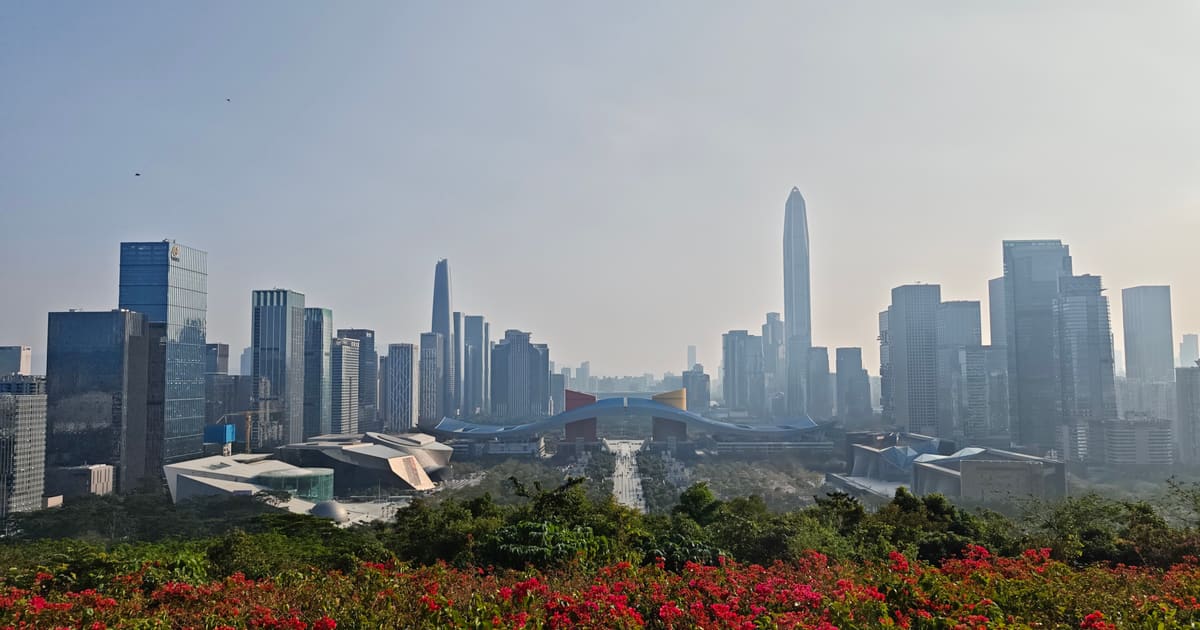
The APEC (Asia-Pacific Economic Cooperation) leaders’ meeting was held on November 18 and 19 in Shenzhen, China, chaired by Chinese President Xi Jinping.
Three things made news:
- The declaration: The 21 member economies agreed on a leaders’ declaration, the “Shenzhen Outlook.”
- Great-power meetings: On the sidelines, the U.S. and China, the U.S. and Russia, and, for the first time ever, the U.S., China and Russia together held leader-level talks.
- Takaichi’s treatment: Her airport welcome and other moments led to a widespread perception in Japan that she had been snubbed.
What the Shenzhen Outlook does and doesn’t say
The leaders met for about two hours and 20 minutes on the morning of the 19th and adopted the declaration. Its theme is “Building an Asia-Pacific Community to Prosper Together.”
Its main points:
- Advancing work toward a Free Trade Area of the Asia-Pacific (FTAAP)
- Strengthening supply chains and keeping trade corridors, including for energy, open
- Endorsing a Connectivity Blueprint for 2026-2035
- Promoting trade digitalization, such as paperless trade
As in the previous year, it does not mention the World Trade Organization. It contains no new free trade agreements or concrete tariff cuts. Xi pledged $20 million for APEC cooperation projects.
Vietnam hosts next. Japan will chair APEC in 2031.
Great-power talks: no truce extension
Also on the 19th, Trump and Xi met for about an hour. According to China’s Foreign Ministry, they agreed to draw up an action plan for a “constructive and strategically stable” relationship.
But no extension of the tariff truce was agreed. It still expires on January 10, 2027, and talks have been pushed to after the G20 summit in December. Semiconductors and rare earths do not appear in China’s readout.
China’s readout says Trump stated that the U.S. “does not support Taiwan independence.” This has not been confirmed in the White House’s account.
Later, Trump, Xi and Russian President Vladimir Putin met together for the first time and issued a “peace declaration.” As described in the update to our previous article, it includes no nuclear reductions. Trump and Putin also met separately for about 40 minutes, mainly on Ukraine, according to the Russian side.
Takaichi’s two days
It was Takaichi’s first visit to China as prime minister. Japan-China relations have been frozen since her Diet remarks on a Taiwan contingency last November. China demands that she retract or correct them as a condition for dialogue.
In order:
- Afternoon of the 18th: Arrived in Shenzhen from Manila. She was met by a protocol ambassador from China’s Foreign Ministry.
- Evening of the 18th: Shook hands and posed for a photo with Xi before the dinner, their first encounter since her remarks. After the dinner, she spoke with Putin for about 30 minutes.
- Morning of the 19th: Shook hands with Xi again before the session. According to Nikkei, the contact lasted about 10 seconds.
- Afternoon of the 19th: Held a press conference in Shenzhen, saying she had gained “a solid sense of results.”
- Night of the 19th: After returning home, held a roughly 20-minute phone call with Trump.
No Japan-China summit was held.
How much of the “snub” is real?
On social media and TV in Japan, the view spread that she had been snubbed and brushed aside. South Korean media also covered her treatment prominently.
There were reasons for that reading.
The difference in welcome was real. Putin was greeted by young people with flags and flowers, and Xi personally met Trump at the airport. The leaders of South Korea, Australia and Indonesia got music and dancing. Takaichi did not.
The step-gap footage left a strong impression. The stairs did not line up with the door of the government plane, and Takaichi had to check her footing as she stepped down. Chief Cabinet Secretary Minoru Kihara said on the 20th that the government had information in advance and handled it with safety in mind. He did not say whether Japan would protest.
China’s Foreign Ministry says it made “appropriate protocol arrangements for all participants.” Journalist Kota Takaguchi sees China’s approach as doing what a host must and nothing more. It can be read as a message that there will be no special treatment unless she retracts her remarks. Whether the step gap was intentional, however, is not known.
Some reactions went too far, though.
“Trump ignored her too” comes from a report that after the group photo, Takaichi approached Trump from behind and spoke to him, and he walked off without replying. Even Josei Jishin, which reported it, wrote that the full story is unclear. The two spoke by phone that night, and there is no basis for saying she was ignored.
“Japan gained nothing” also overstates it. Her talk with Putin was the first between the two leaders since Russia’s invasion of Ukraine, and she directly asked for the release of the detained Hokkaido Shimbun reporter. It was not a formal meeting, however, and the Kremlin did not announce it.
How X reacted
On X, both praise and criticism of Takaichi spread widely.
The most prominent praise centered on a video of her departure. A roughly 80-second clip posted on the 20th by a Vietnamese-language account has been viewed more than 10 million times. It shows Takaichi walking past an honor guard and smiling and waving at the door of the government plane. The post says that, while China’s diplomatic conduct was rated poorly, Japan’s prime minister left Shenzhen in a very “Japanese” way.
Replies from users in Vietnam, the U.S. and elsewhere included comments such as “Japan is blessed to have such a noble PM.” Many Japanese users also wrote that she stayed courteous despite rude treatment, and that it was China that showed a lack of class.
Criticism focused on “isolation.” Footage of Trump and Xi walking side by side after the group photo, with Takaichi behind them, circulated widely. Posts said she had not talked with any leader and was isolated at the edge of the world stage, and the hashtag “#日本の恥” (“Japan’s shame”) was used. The Asahi Shimbun wrote in an editorial that the prime minister was deepening her sense of isolation.
The episode also drew attention abroad. Posts about the step gap in English, Turkish, Polish and other languages were viewed hundreds of thousands to more than a million times each. A video of Takaichi making a playful face and briefly sticking out her tongue at Malaysian Prime Minister Anwar Ibrahim before the session on the 19th was shared by an overseas news account and viewed more than 1.7 million times.
Politicians weighed in too. Fumitake Fujita, co-leader of Nippon Ishin, discussed the “snub” coverage and how Japanese media reported it in his own video. Former Foreign Minister Seiji Maehara also criticized the difference in welcomes.
Some false claims spread as well. Chinese-language accounts and others posted the footage of Takaichi walking behind the leaders with the caption that it was “footage the government strictly bans from domestic broadcast,” and it was viewed more than 6 million times. There is no basis for such a ban, and Japanese news outlets have reported on her “isolation,” including this scene.
No meeting with Taiwan’s representative
According to the Asahi Shimbun, Takaichi did not meet Taiwan’s representative this time. Japanese prime ministers had met Taiwan’s APEC representative every year since 2022. Takaichi did so last year and posted a photo on X, prompting a Chinese protest.
This year’s representative was Stan Shih, founder of computer maker Acer. Government sources say information security and other factors led Japan to avoid a meeting inside China. Kihara declined to comment on “each individual exchange.”
What it means for Japan
- Japan-China: Despite the handshakes, no opening for better relations emerged. A senior prime minister’s office official reportedly hopes footage of the handshakes spreading in China will change the mood. Journalist Kosuke Takahashi, however, writes that real improvement is hard to foresee until one of the two leaders changes.
- Japan-Russia: A leader-level channel reopened after seven years. Whether the reporter case or the Japan Tobacco issue moves remains to be seen.
- Japan-U.S.: Trump briefed Takaichi directly on the U.S.-China and U.S.-China-Russia talks, which helped ease fears of decisions being made over Japan’s head.
- Economy: With the U.S.-China tariff truce not yet extended, uncertainty remains. There was no visible progress on China’s rare earth controls, so Japanese companies’ supply chains remain in wait-and-see mode.
- Taiwan: If Trump did say the U.S. does not support Taiwan independence, as China claims, it bears on Japan’s security. How Washington explains it is worth watching.
Summary
Given the modest welcome and the step-gap footage, it is natural to feel Takaichi was snubbed. As long as China demands a retraction of her remarks, the lack of a Japan-China summit was also somewhat expected.
But saying Trump ignored her too, or that Japan gained nothing, departs from the facts. Relations with China did not move, but a channel to Russia opened and coordination with the U.S. was confirmed by phone. The next chance for Japan’s and China’s leaders to meet is the G20 in December.
Sources (mostly in Japanese)
2. What each side says
We summarize each side's main arguments in our own words, based on the original statements and reporting.
A diplomatic setback
Takaichi was greeted at the airport only by a Chinese Foreign Ministry ambassador, without the music, dancing or flowers given to the leaders of South Korea, Australia and Indonesia. A TV Asahi reporter traveling with her said Japanese Foreign Ministry officials called it "terrible" and "blatant."
There was a large gap between the door of the government plane and the top of the stairs, and Takaichi had to check her footing as she stepped down. Ruling-party lawmakers voiced concern about the danger, and former Foreign Minister Seiji Maehara of Nippon Ishin criticized China for treating leaders differently.
Contact with Xi was limited to handshakes, with no summit. A commentator on a TBS program said that if this is the result even when the prime minister goes in person, improving relations will take time.
There were gains
Takaichi spoke with Russian President Vladimir Putin for about 30 minutes, asking for the early release of a detained Hokkaido Shimbun reporter and the reversal of Russia's effective seizure of Japan Tobacco's Russian business. It was the first face-to-face exchange between the two countries' leaders since 2019. She said creating an environment for direct communication was "the biggest progress."
At her press conference, Takaichi said the declaration included "many elements that Japan values, such as quality infrastructure and strengthening trust in cross-border data."
After returning home on the night of the 19th, Takaichi spoke with President Trump by phone for about 20 minutes and was briefed on the U.S.-China and U.S.-China-Russia meetings. They confirmed close Japan-U.S. coordination.
Posts on X
Fumitake Fujita, Nippon Ishin co-leader: Nov. 20 post announcing his video on Takaichi's APEC diplomacy, the "snub" coverage and how Japanese media reported it
View the post by Fumitake Fujita, Nippon Ishin co-leader on X ↗
What people are saying
We searched X for terms such as "高市 深圳 帰り", "高市 ぼっち APEC", "高市 孤立 APEC", "高市 APEC 外交 失敗" and "Takaichi Shenzhen," and reviewed posts in Japanese, English and other languages from November 18 to 21, 2026. Both praise and criticism spread widely, without a clear tilt either way.
A diplomatic setback
- “She barely talked with any leader and ended up alone on the sidelines. I wonder if this is really "diplomacy blooming at the center of the world."”
- “Even Trump didn't respond when she spoke to him. It looks like other leaders, not just China, are keeping their distance.”
- “Not speaking English is understandable, but if she had been building ties with other leaders all along, she wouldn't have ended up this alone.”
- “This is no laughing matter. If other countries are starting to think dealing with Japan isn't worth it, that's bigger than one prime minister.”
There were gains
- “Even after being treated rudely, she stayed courteous to the end and left with a smile. China is the one that showed a lack of class.”
- “China snubbed her openly because she has said what needs to be said. It's practically a badge of honor.”
- “I don't care how China acted. I'm just glad our prime minister conducted diplomacy Japan can be proud of.”
- “What's strange is Japanese media calling it a failure before the trip was even over.”
Posts are paraphrased, not quoted, and individual accounts are not named.
3. Where things stand
Where they agree
- No Japan-China summit was held; contact stopped at handshakes.
- Takaichi's welcome was smaller than other leaders'.
- Japan's and Russia's leaders spoke face-to-face for the first time in seven years.
Where they disagree
- Were the welcome and the step gap a deliberate snub by China?
- Was the lack of a Xi meeting a diplomatic failure, or expected from the start?
What to watch
- Whether Japan's and China's leaders have contact at the G20 in December.
- Whether Russia moves on the detained reporter or Japan Tobacco.
- Whether the U.S.-China tariff truce, which expires January 10, 2027, is extended.
Footage of the modest welcome and the step gap looked to many like a snub. With China still demanding that Takaichi retract her Taiwan remarks, that reading is understandable. But claims that Trump also ignored her, or that Japan gained nothing, go too far. Relations with China did not move, but Japan took a step with both Russia and the U.S.